
Hercules Extends & Expands Leviathan While Hook Emerges As The Next Big Target
Leviathan is getting bigger; this morning's update contained a silver surprise in hole 25-21 as well as the best IP target the project has ever seen.

This morning, Hercules Metals (TSX-V:BIG, OTC:BADEF) delivered another strong batch of drill results from the Leviathan porphyry copper system. At Leviathan, HER-25-18 and HER-25-21 delivered the kind of long, continuous porphyry intercepts that build scale.
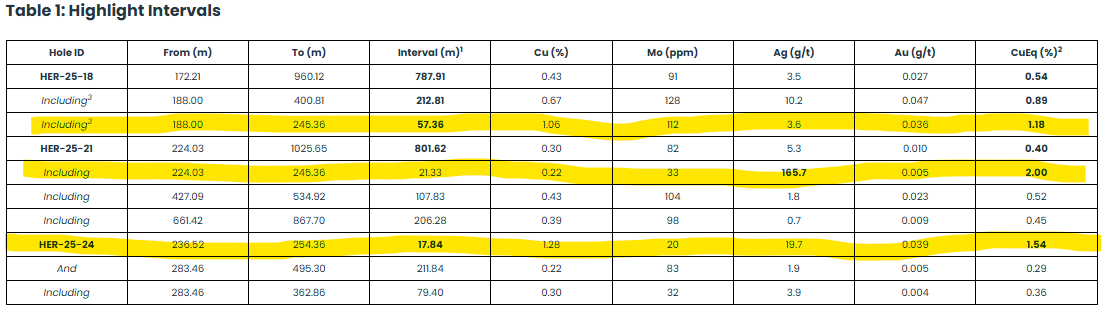
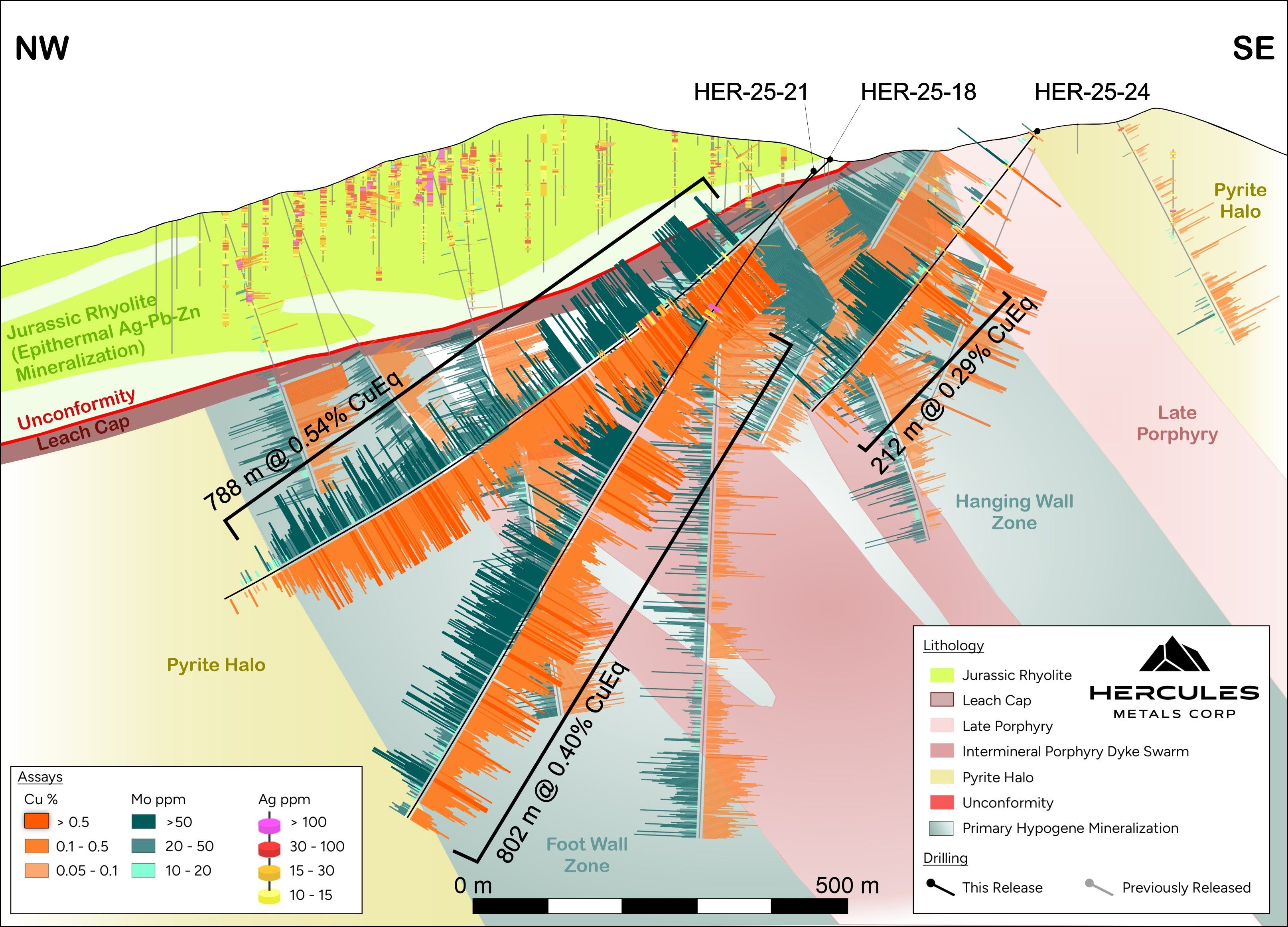
Drill hole HER-25-18 returned 787.9 meters of 0.54% CuEq, including 212.8 meters of 0.89% CuEq, while HER-25-21 returned 801.6 meters of 0.40% CuEq, extending the Footwall Zone to the southwest. These are broad porphyry-scale mineralized intervals with the grade continuity needed to keep expanding the Leviathan system toward a meaningful resource.
This morning, Hercules Metals (TSX-V:BIG, OTC:BADEF) delivered another strong batch of drill results from the Leviathan porphyry copper system. At Leviathan, HER-25-18 and HER-25-21 delivered the kind of long, continuous porphyry intercepts that build scale.
Drill hole HER-25-18 returned 787.9 meters of 0.54% CuEq, including 212.8 meters of 0.89% CuEq, while HER-25-21 returned 801.6 meters of 0.40% CuEq, extending the Footwall Zone to the southwest. These are broad porphyry-scale mineralized intervals with the grade continuity needed to keep expanding the Leviathan system toward a meaningful resource.
However, the most important quality element is the high-grade mineralization near the top of the system. All three holes carried shallow high-grade zones: 57.4 meters of 1.18% CuEq in HER-25-18, 21.3 meters of 2.00% CuEq in HER-25-21, and 17.8 meters of 1.54% CuEq in HER-25-24. The HER-25-21 high-grade interval is especially interesting because the CuEq is heavily boosted by 165.7 g/t silver, which may indicate a distinct silver-rich pulse or structural vector near the top of the porphyry assemblage.
Hole 25-24 was definitely the worst of the 3 holes reported, but even this hole managed to deliver a nice slice of 1.5%+ Cu-Eq enrichment blanket mineralization.
From a mine-building perspective, this shallow high-grade enrichment matters because it could improve the early-stage economics of a future open-pit scenario. Long intervals of 0.40%-0.54% CuEq are valuable for tonnage and scale, but shallow zones running 1%+ CuEq are the material that can potentially support better starter-pit grades, faster payback, and a more compelling resource model.
After today’s results, I can see the open-pit resource taking shape. It’s not small. Some quick back of the napkin math gets me above 5 billion pounds of copper with a resource grade close to .50% Cu-Eq—if the cutoff grade is lowered to include all the .20% Cu mineralization then Leviathan could already be approaching 7-8 billion pounds of copper. Admittedly, some of that copper mineralization is deep and below standard underground mining grades.
Ten billion pounds of copper is the resource threshold that gets the world’s largest copper producers to pay attention and begin booking flights, signing CAs etc.
Hercules emphasized that Leviathan is still open along trend to the southwest, and more step-out drilling to investigate this area is planned for later this year.
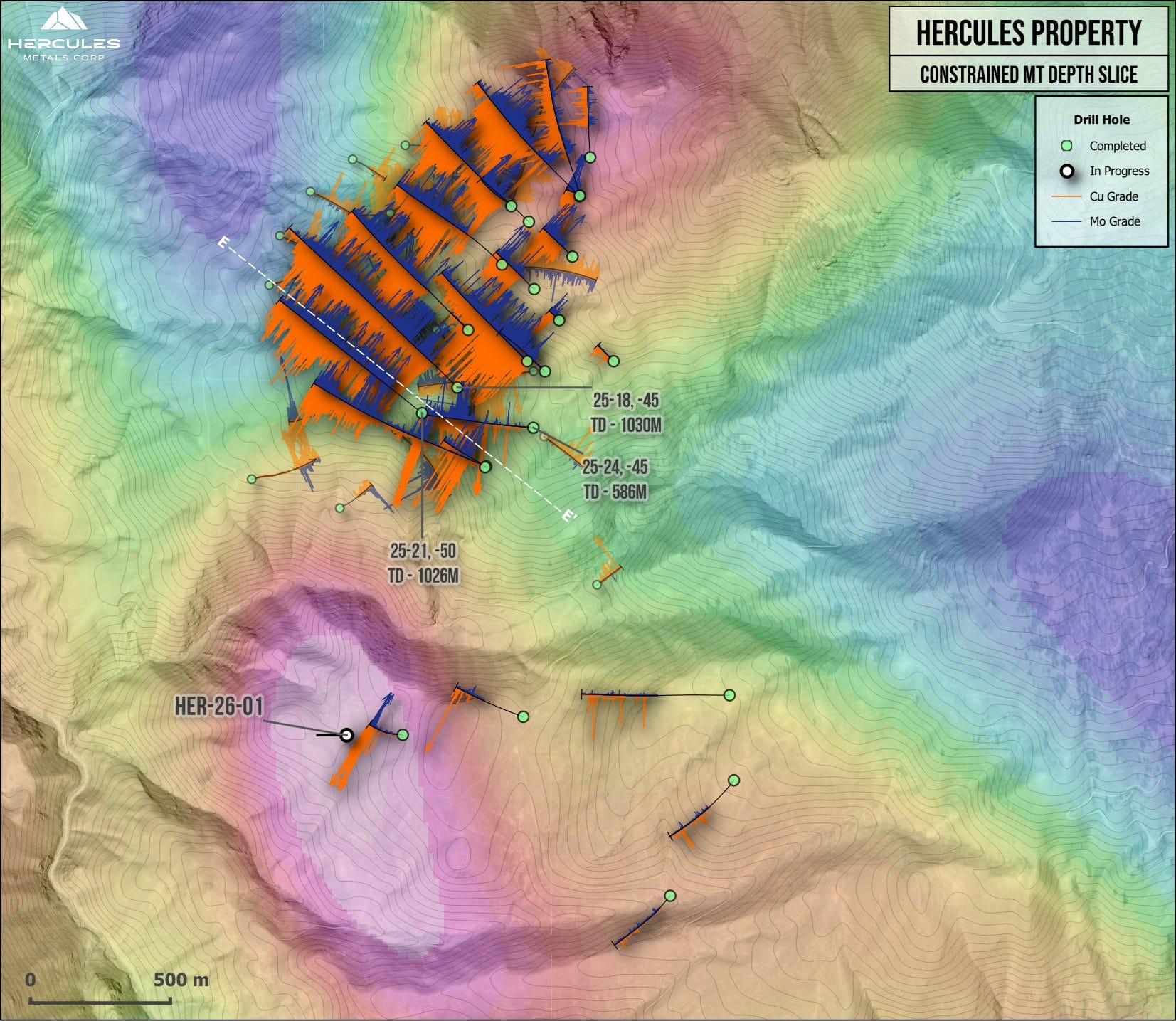
The ‘bad news’ in today’s release is that holes 18 and 21 both reached the pyrite halo on the other side of the Foot Wall Zone, with copper grades dropping off significantly once the holes departed the Foot Wall. Basically, the main zone at Leviathan is ~1,200 meters in strike length with width varying from ~300 meters in the narrowest parts, to as thick as 700 meters in the widest area (south)—high-grade mineralization begins as shallow as ~70 meters vertical depth (near ‘Metheny’, hole 24-20), and as deep as ~300 meters vertical depth (in the west, holes 23-26 and 24-12 etc).
This morning’s news release also provided a significant update on the Pegasus and Hook targets. Based on the commentary in this NR, the first hole at Pegasus delivered enough to warrant follow-up, but nothing stunning. The vector continues to be west, which begs the question why Hercules keeps stepping out to the east?!!!
Part of exploration is drilling holes to find out where not to drill next.
The real surprise is the results of the IP survey at Hook—I hate to say it because the vast majority of IP anomalies do not yield economic mineralization once drill-tested, but this is a screamer target!
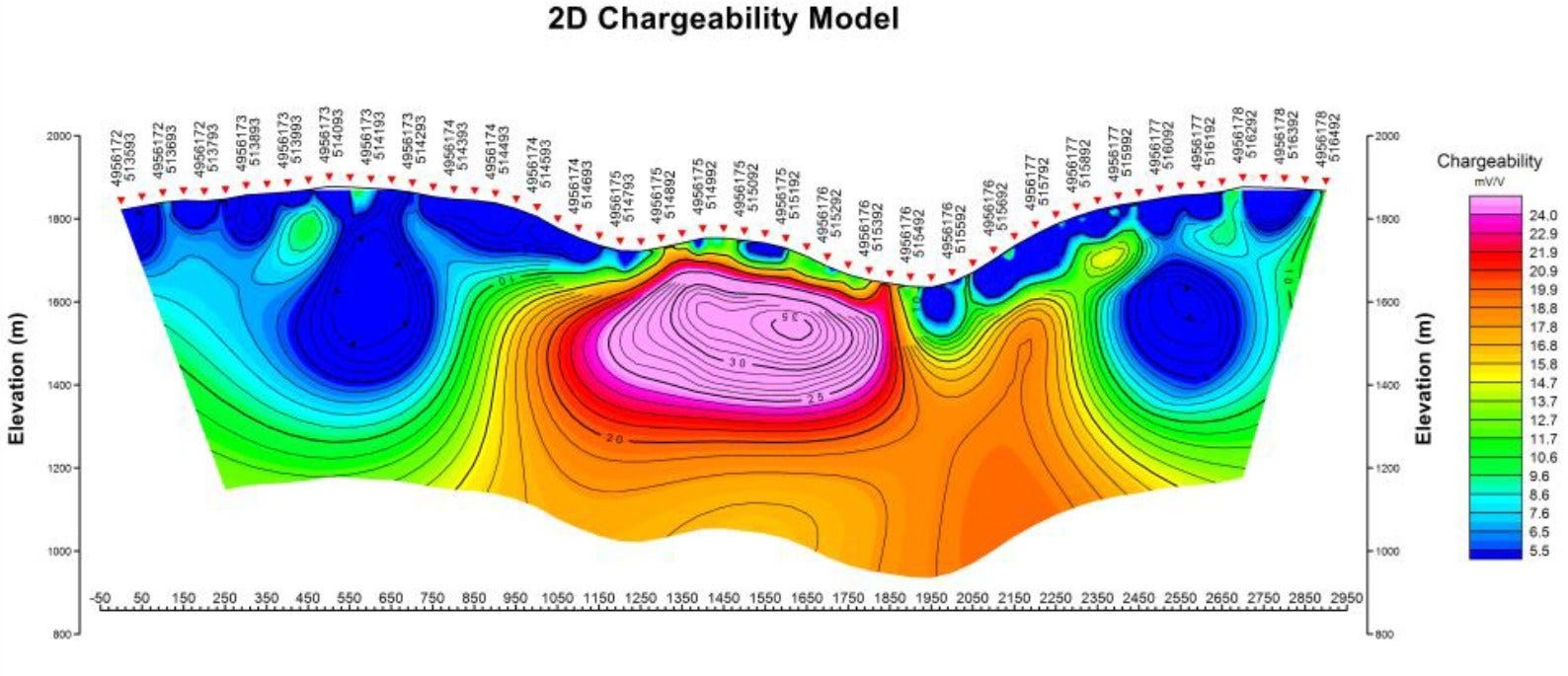
It actually looks slightly better than the IP anomaly at Leviathan, and it’s larger.
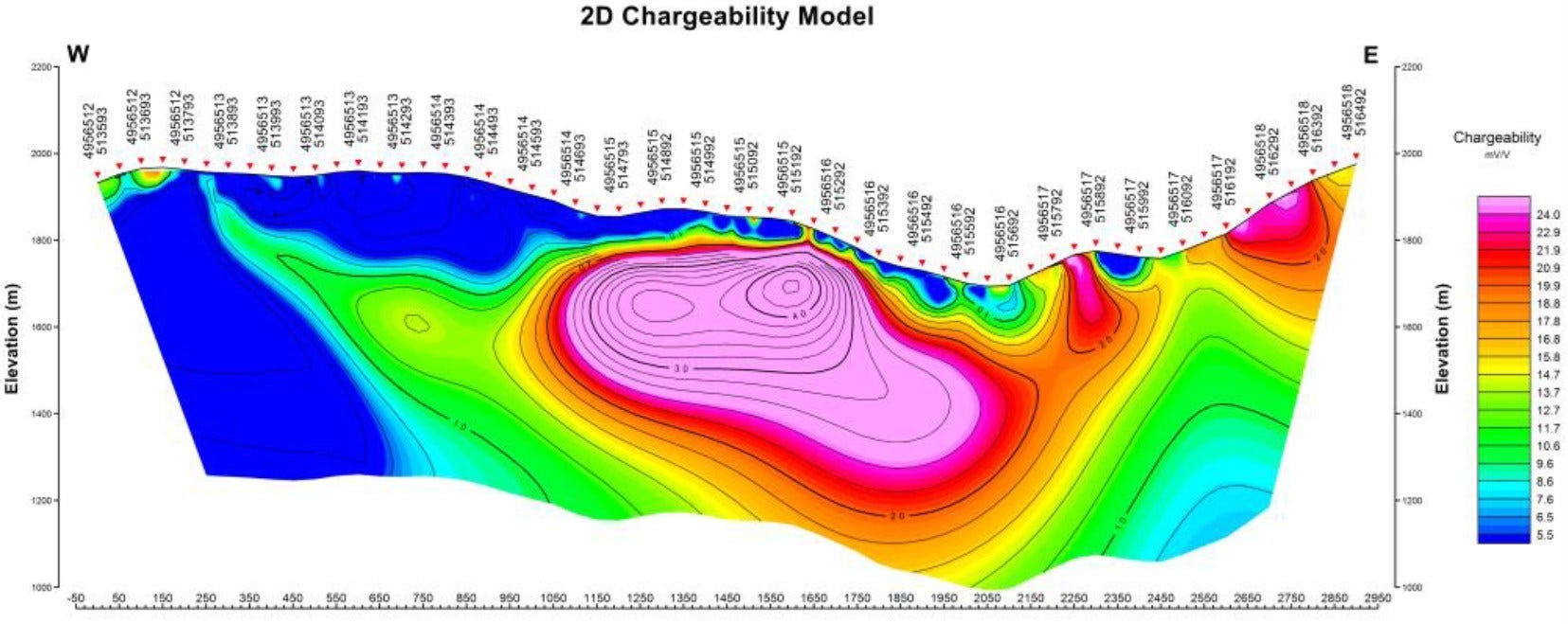
We should keep our expectations modest, but damn this target looks good!
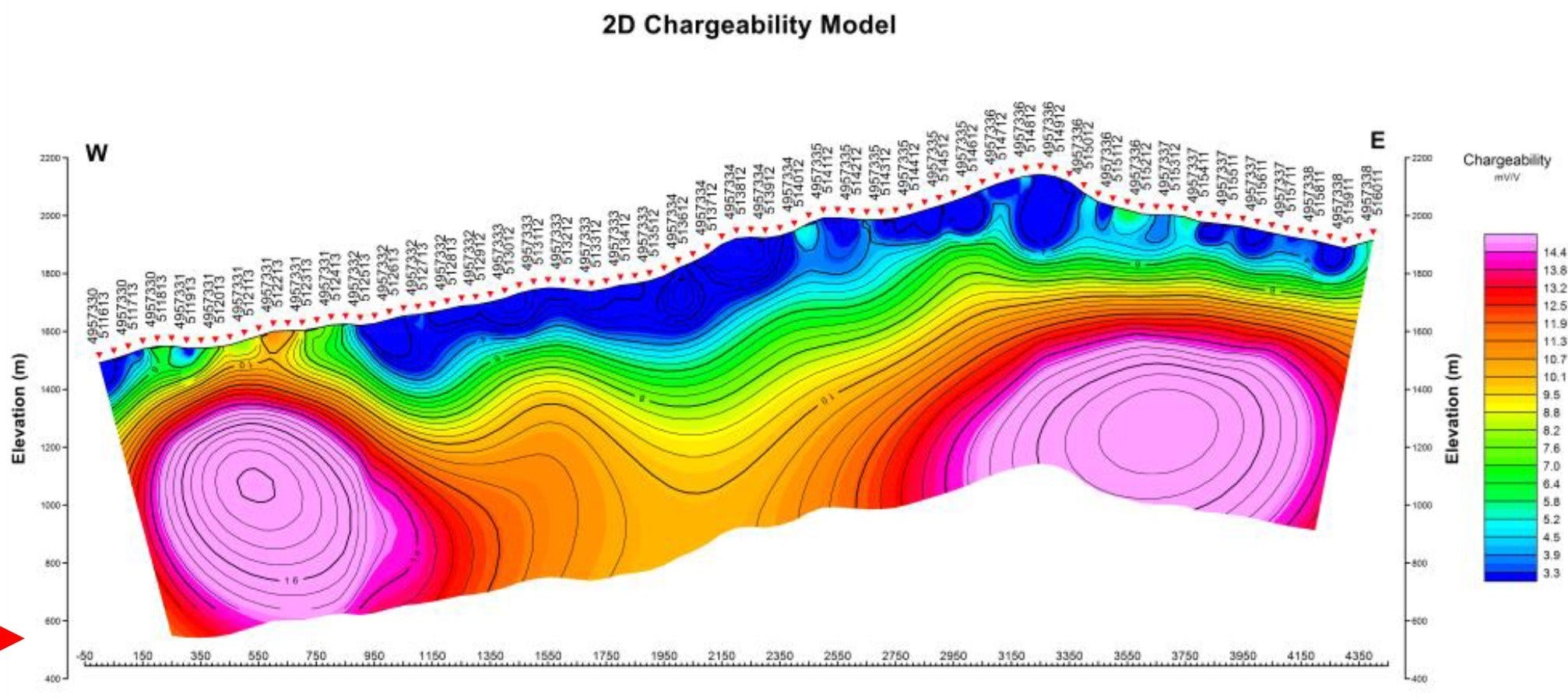
Another attractive aspect of the Hook Target is that the cover (Jurassic rhyolite, basalt, etc.) in this area should be minimal. The drill will essentially be collared in Triassic rocks, and the first hole in the target (HER-26-03) is designed to investigate the southern portion of the Hook IP anomaly, including the IP line with the strongest chargeability values (IP Line 2N).
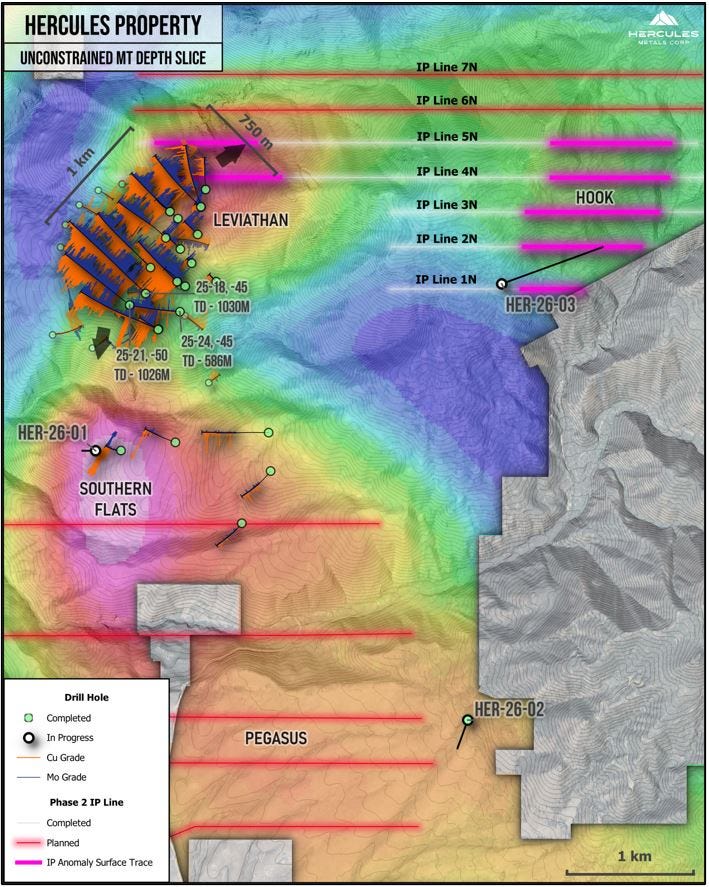
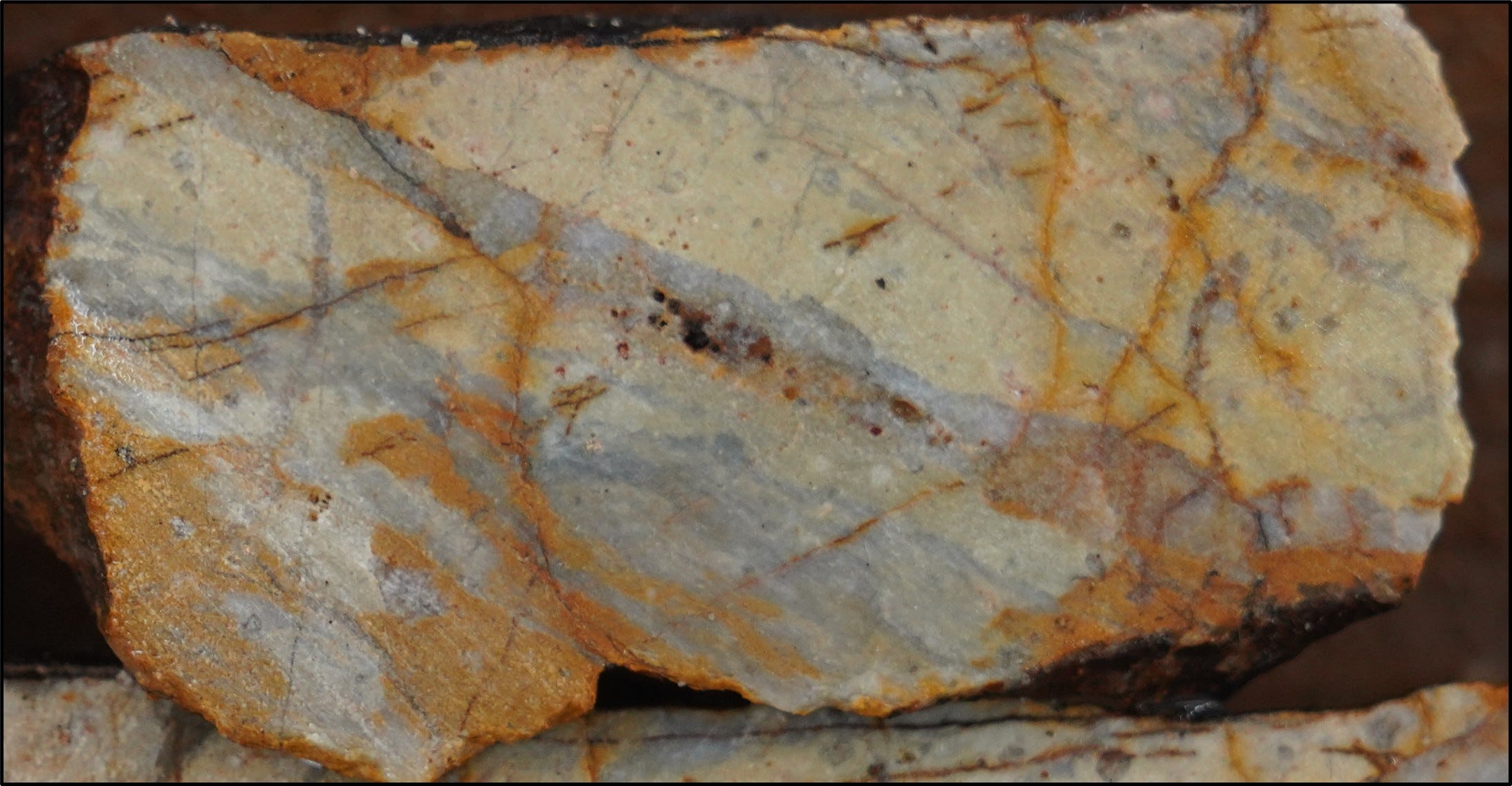
Based on the mineralization found at surface and the IP signature, Hook has the potential to be a fairly shallow target with potentially larger scale than Leviathan. Of course, it is very early days at Hook and these comments are based on limited data.
To be clear, chargeability is not copper. The drill bit still needs to prove what is causing the anomaly. However, Hook is compelling because of its geometry, strength, near-surface position, and—most importantly—its similarity to Leviathan.
In conclusion, Hercules continues to advance the 2026 program with two core rigs turning: HER-26-01 at Southern Flats, which appears to be getting quite deep and may now be approaching the 1,200-meter level (my speculation), and HER-26-03 at Hook, which was collared within the last week to test the strongest near-surface chargeability anomaly identified on the property to date.
The satellite targets remain question marks, but they are increasingly compelling question marks. Hook, Pegasus, and Southern Flats each offer the possibility of proving up additional porphyry centers. However, while the market waits for the drill bit to answer those bigger district-scale questions, the core Leviathan Deposit Area continues to do exactly what it needs to do: grow.
With every additional long intercept and every new zone of shallow high-grade enrichment blanket mineralization, Leviathan is moving closer to the scale and quality threshold where larger mining companies begin to pay serious attention.
Disclosure: Author owns shares of Hercules Metals at the time of publishing and may choose to buy or sell at any time without notice. Goldfinger Capital recently participated in producing a video documentary focused on Hercules and the Idaho Copper Belt. Compensation was received from Hercules Metals Corp to pay for the costs of producing the video. This compensation should be viewed as a major conflict with Goldfinger Capital’s ability to be unbiased.
DISCLAIMER: The work included in this article is based on current events, technical charts, company news releases, corporate presentations and the author’s opinions. It may contain errors, and you shouldn’t make any investment decision based solely on what you read here. This publication contains forward-looking statements, including but not limited to comments regarding predictions and projections. Forward-looking statements address future events and conditions and therefore involve inherent risks and uncertainties. Actual results may differ materially from those currently anticipated in such statements. This article is provided for informational and entertainment purposes only and is not a recommendation to buy or sell any security. Always thoroughly do your own due diligence and talk to a licensed investment adviser prior to making any investment decisions. Junior resource companies can easily lose 100% of their value so read company profiles on www.SedarPlus.ca for important risk disclosures. It’s your money and your responsibility.