
Pentagon AI Program To Set Critical Minerals Prices - The Dawn Of The Copper Age
A Reuters story helps to confirm that Trump 2.0 is using a Pentagon designed AI program to set critical minerals pricing for a global metals trading program.

Today’s Reuters report signals something much bigger than just another policy trial balloon — it hints at the early architecture of a Western “China-free” pricing system for critical minerals.
At the center of the proposal is a Pentagon-developed AI platform — OPEN (Open Price Exploration for National Security) — which the Trump administration is reportedly considering using to help establish reference prices for key strategic metals across a new allied trade bloc.
This is not about predicting prices. It’s about re-engineering how prices are formed.
For years, Western governments have grappled with a difficult reality: many critical minerals markets are thin, opaque, and heavily influenced by Chinese production and export policies. Traditional market signals have often failed to incentivize new domestic supply, particularly for smaller but strategically essential metals such as antimony, tungsten, germanium, and gallium.
The Pentagon’s OPEN (Open Price Exploration for National Security) program appears to be an attempt to address that imbalance by introducing a new framework for “reference pricing” grounded in national security priorities rather than purely commercial benchmarks.
This is not simply another subsidy proposal. It represents a potential shift toward redesigning the structure of the market itself.
From Price Forecasting to Price Formation
The key takeaway from the Reuters story is that the Pentagon’s AI initiative is less about predicting where metals will trade next quarter and more about determining where they should trade under a strategic, non-distorted supply chain. By incorporating production costs, logistics, and supply-chain resilience into pricing models, policymakers appear to be exploring a parallel benchmark system — one that could operate alongside existing exchanges influenced by Chinese supply.
In practical terms, this suggests the emergence of a dual-market dynamic. On one side, traditional global pricing mechanisms will continue to reflect large-scale production and export flows. On the other, a Western-aligned pricing framework could begin to reflect security-driven valuations — especially in markets where China has historically set the marginal price through aggressive production or export controls.
For investors, this raises a profound question: what happens when national security considerations begin to influence price discovery as much as supply and demand?
Tariffs as a Policy Tool — Industrial Strategy by Another Name
Another critical component of the reported plan involves the potential use of adjustable tariffs across a coalition of allied countries. Rather than directly guaranteeing prices to individual mining companies — a politically difficult approach — policymakers appear to be considering trade mechanisms that reinforce AI-derived reference prices.
In effect, tariffs could serve as a form of indirect price support by discouraging imports that undercut the strategic benchmark. This would not constitute an explicit price floor, but it could create an environment in which Western projects become economically viable at higher valuation levels than current market pricing would otherwise allow.
For years, investors have debated whether Western governments would intervene directly to stabilize critical mineral markets. The approach outlined in the Reuters article suggests a more subtle strategy: reshape the rules of trade so that strategic pricing emerges organically.
Why the Focus on Smaller Strategic Metals Matters
Notably, the initial focus of the AI pricing framework appears to be on niche but essential materials — antimony, tungsten, gallium, and germanium — rather than bulk commodities like copper or iron ore.
This is a logical starting point.
These markets are small, fragmented, and often lack transparent price discovery mechanisms. They are also heavily tied to defense technologies and advanced manufacturing, making them prime candidates for national security intervention.
If successful, however, the framework could eventually extend into larger markets. Investors should pay attention to this possibility. Historically, structural changes introduced in niche commodities have often served as precursors to broader policy shifts.
It’s fitting that billionaire mining entrepreneur Robert Friedland delivered a presentation today at the BMO Metals & Mining Conference in Florida titled “The Dawn of The Copper Age”, using an Indiana Jones themed title image:
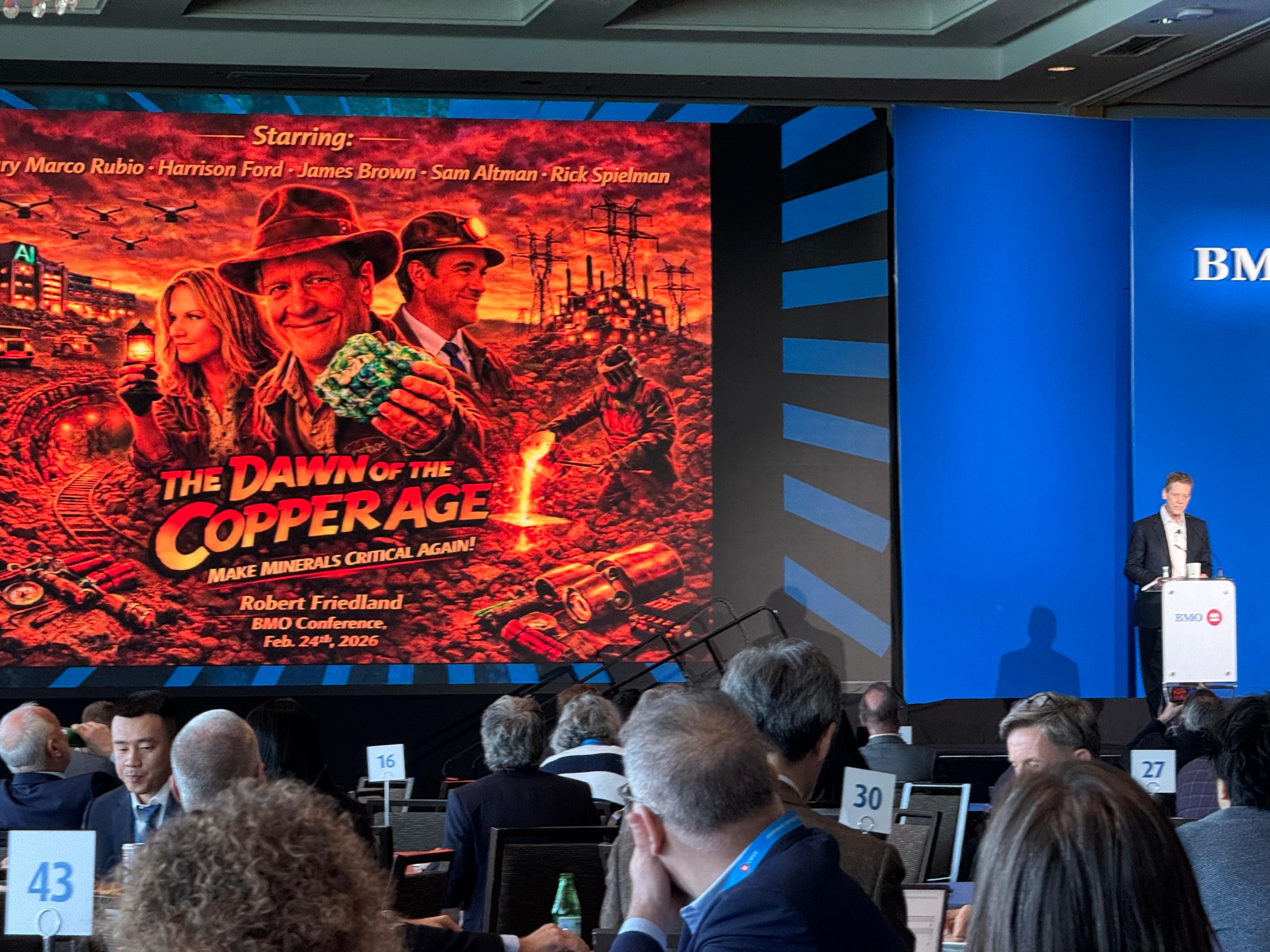
Starring Marco Rubio and Sam Altman…..
Will Trump say something about critical minerals and energy independence in tonight’s State of The Union address to Congress?
A Parallel Metals Market May Be Emerging
Rather than relying exclusively on exchanges and spot markets influenced by Chinese production, Western governments may be moving toward a model in which strategic metals carry a geopolitical premium.
Such a development would fundamentally alter how investors evaluate mining equities. Projects previously dismissed as uneconomic at current prices could suddenly become viable if pricing begins to reflect supply-chain resilience rather than purely lowest-cost production.
This does not guarantee higher prices across the board. Implementation challenges remain significant. Allies may disagree on tariff structures, industry participants may resist government-defined benchmarks, and markets rarely transition smoothly to new pricing systems. Nonetheless, the direction of travel appears increasingly clear.
The Bigger Picture: Commodities as Strategic Assets
The Reuters report reinforces a broader theme that has been building over the past several years: critical minerals are gradually shifting from being treated solely as commodities to being viewed as strategic assets.
For decades, the dominant assumption in metals markets was that globalization and free trade would determine pricing outcomes. Today, geopolitical competition and supply-chain security are beginning to challenge that assumption. The Pentagon’s AI initiative represents one of the clearest signals yet that Western policymakers are willing to experiment with new mechanisms to secure access to essential materials.
For mining investors, the message is straightforward. The next phase of the bull market in critical minerals may not be driven solely by traditional supply-demand deficits. Instead, it could be shaped by policy frameworks that redefine value itself — placing a premium on jurisdiction, resilience, and independence from adversarial supply chains.
It’s probably not an accident that U.S. focused critical minerals developers & explorers are rising this week, maintaining their equity market leadership. At the same time, critical/strategic metals such as copper, tin, silver & nickel continue to display relative strength.
Freeport McMoRan (Daily)
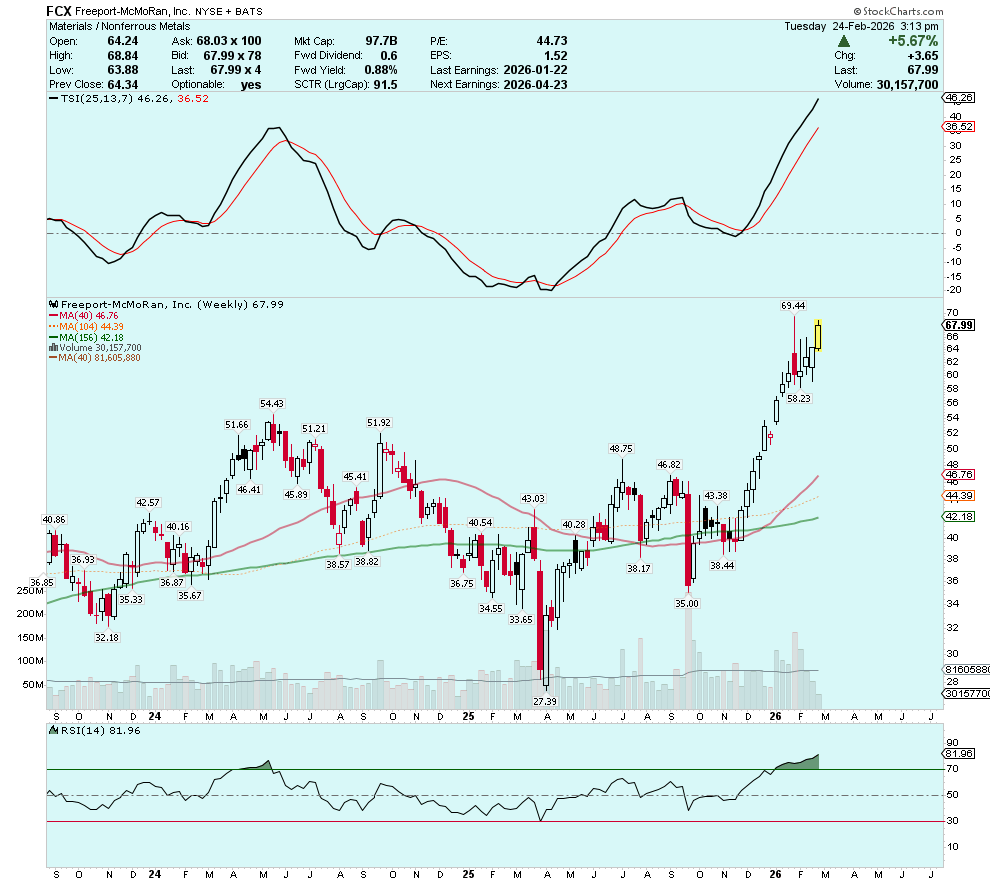
Shares of U.S. based copper producer Freeport McMoRan (NYSE:FCX) have nearly doubled since last September’s underground mud-flow disaster that killed seven workers at its massive Grasberg Mining Complex in Indonesia.
FCX is in the enviable position of owning 9 operating mines in the United States, benefiting from premium Comex pricing on its copper production. Moreover, byproduct metals such as silver, molybdenum, rhenium and gold are also likely to receive premium pricing due to their strategic importance to the national security of the United States.
Hudbay Minerals (Daily)
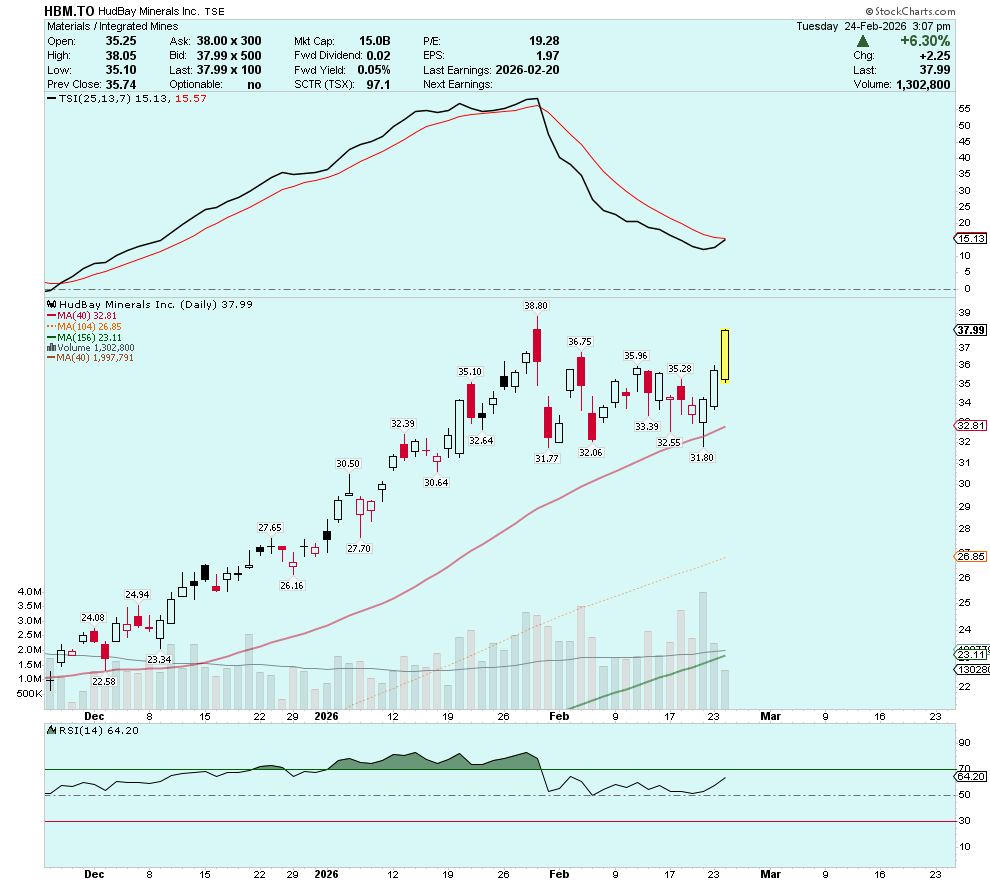
Hudbay (TSX:HBM) has significant U.S. exposure as a result of its Mason Project in Nevada and Copper World Project in Arizona. Additionally, HBM holds a 9.99% strategic stake in C$1.5 billion market cap Arizona copper developer Arizona Sonoran Copper (TSX:ASCU).
Faraday Copper (Daily)
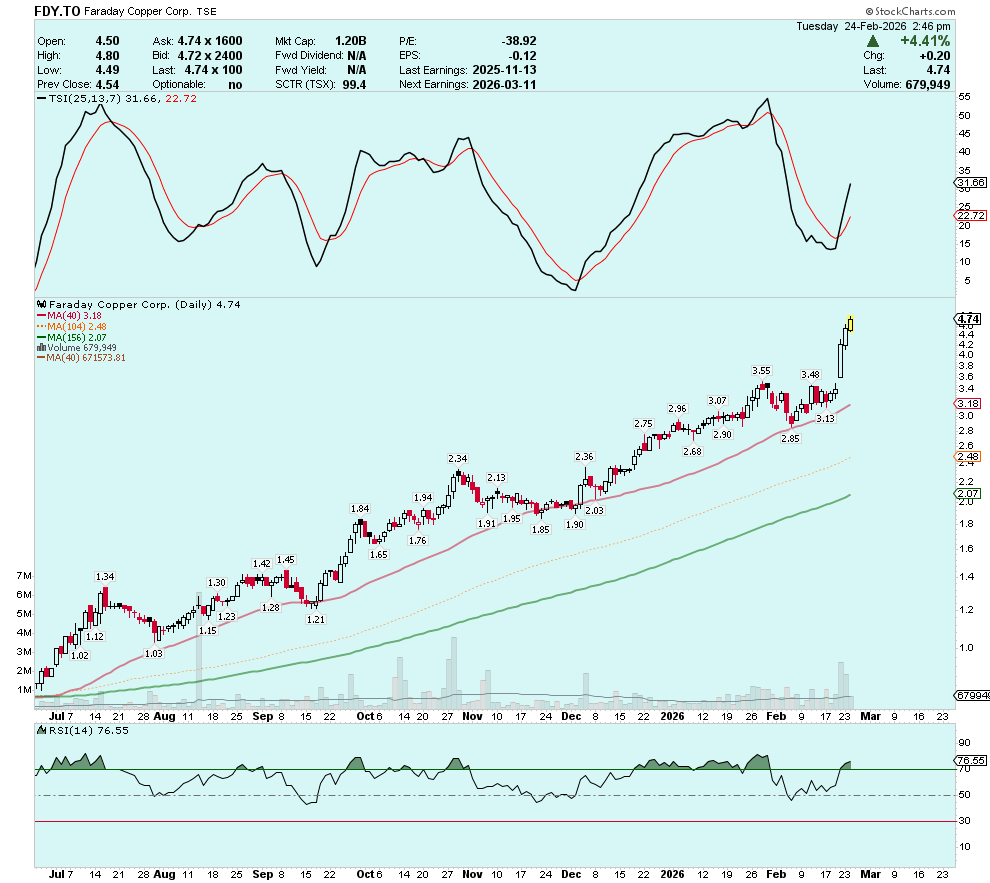
A remarkable multi-day rally has seen shares of Arizona copper developer Faraday Copper (TSX:FDY) rise more than 50% since last week.
Talon Metals (Daily)
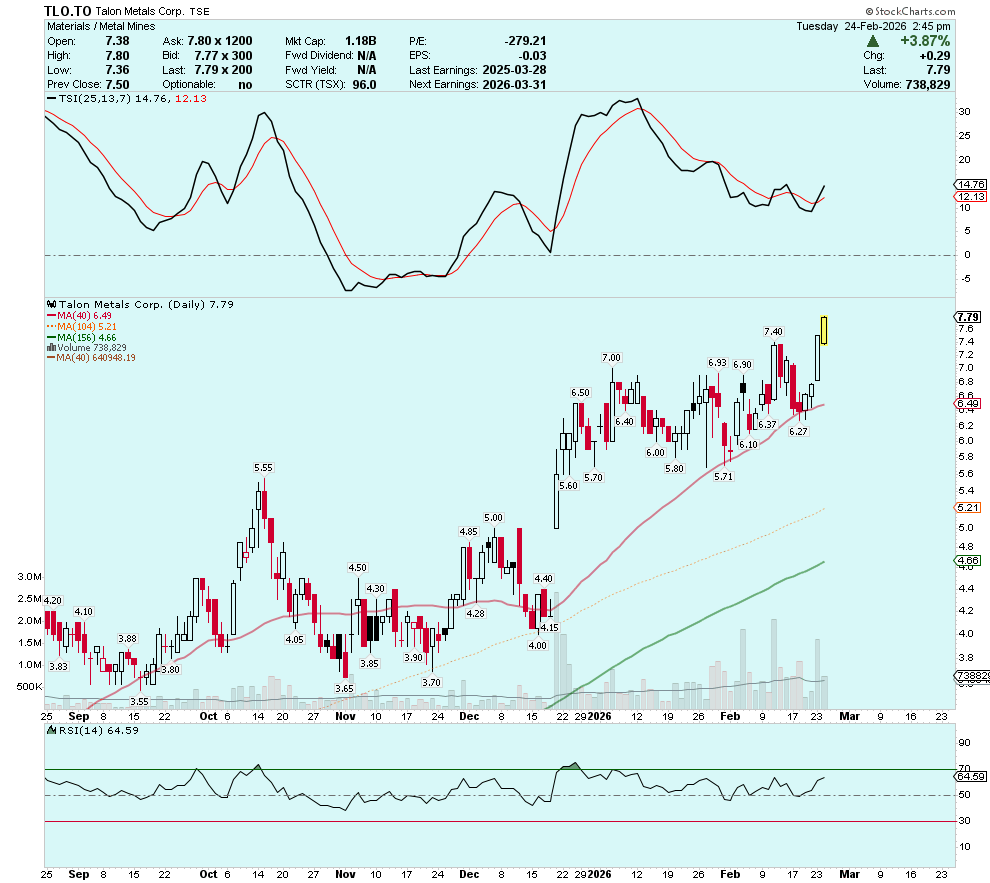
Minnesota/Michigan nickel-copper-cobalt-PGE explorer/developer/producer Talon Metals (TSX:TLO) continues to display notable relative strength, rising more than 15% so far this week.
Perseverance Metals (Daily)
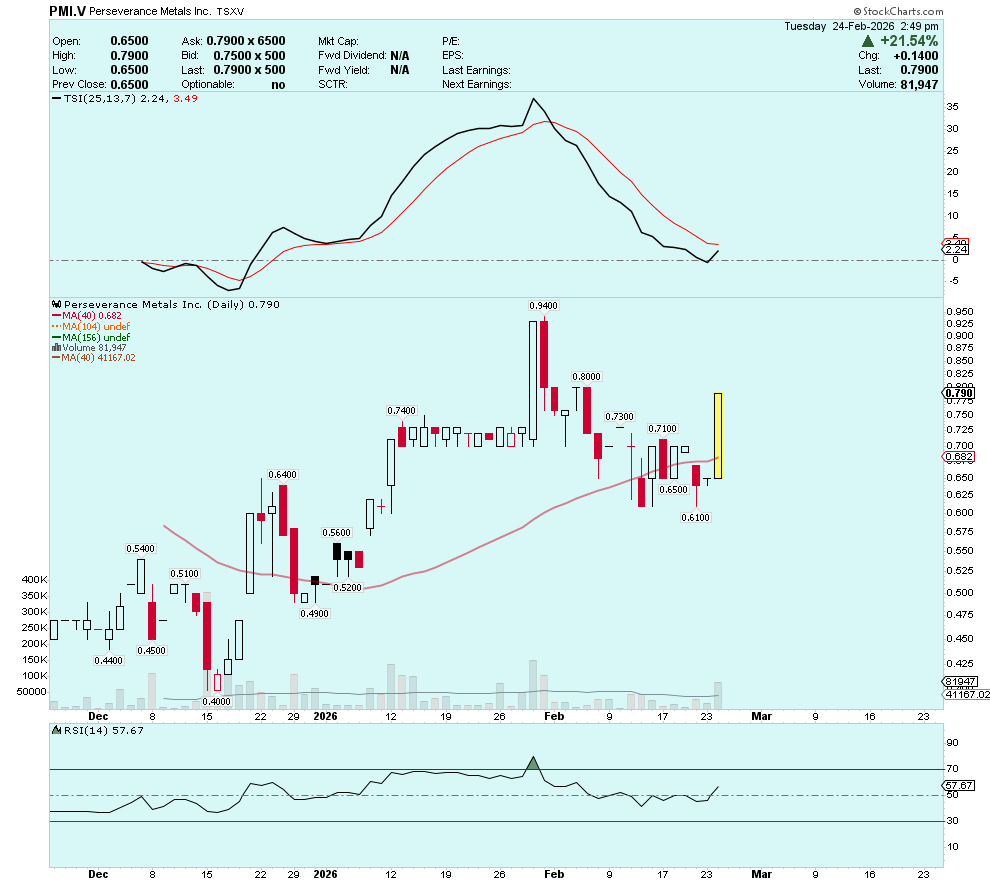
Michigan nickel-copper-cobalt-PGE explorer Perseverance Metals (TSX-V:PMI) is set to close an upsized financing shortly, followed by commencement of the maiden drill program at its Voyageur Project in the Upper Peninsula of Michigan.
Whether the OPEN program ultimately succeeds or evolves into something different, one conclusion seems increasingly unavoidable:
The era of purely market-driven pricing for strategic metals may be coming to an end.
Disclosure: Author owns shares in Talon Metals, Perseverance Metals, and Hudbay Minerals at the time of publishing and may choose to buy or sell at any time without notice.
DISCLAIMER: The work included in this article is based on current events, technical charts, company news releases, corporate presentations and the author’s opinions. It may contain errors, and you shouldn’t make any investment decision based solely on what you read here. This publication contains forward-looking statements, including but not limited to comments regarding predictions and projections. Forward-looking statements address future events and conditions and therefore involve inherent risks and uncertainties. Actual results may differ materially from those currently anticipated in such statements. This article is provided for informational and entertainment purposes only and is not a recommendation to buy or sell any security. Always thoroughly do your own due diligence and talk to a licensed investment adviser prior to making any investment decisions. Junior resource companies can easily lose 100% of their value so read company profiles on www.SedarPlus.ca for important risk disclosures. It’s your money and your responsibility.
Certainly give new meaning ... or adds to ... the term ... market maker ... ;-) I'm in ... have you heard of any staff positions open in the WH ? ;-) !! ...
Very needed insight! In multi-factor production models, there is the concept of 'shadow' prices, which infer the value within a production system of a marginal unit of an input, in terms of the productivity of the production system it contributes within. Pentagon AI is deriving 'shadow prices' for key inputs for their priority supply chains. This can be applied to economy wide supply chains and probably reveal areas of 'free market' failure to capture the actual value of a given commodity. Overall this approach should drive key input prices to surge.