
Silver: The Differences Between 2011 and 2026
There are a laundry list of differences between today's silver market and the one that existed in Spring 2011, but perhaps the clearest differences are visible in the charts.

Silver 2026 vs. Silver 2011: A Completely Different Setup
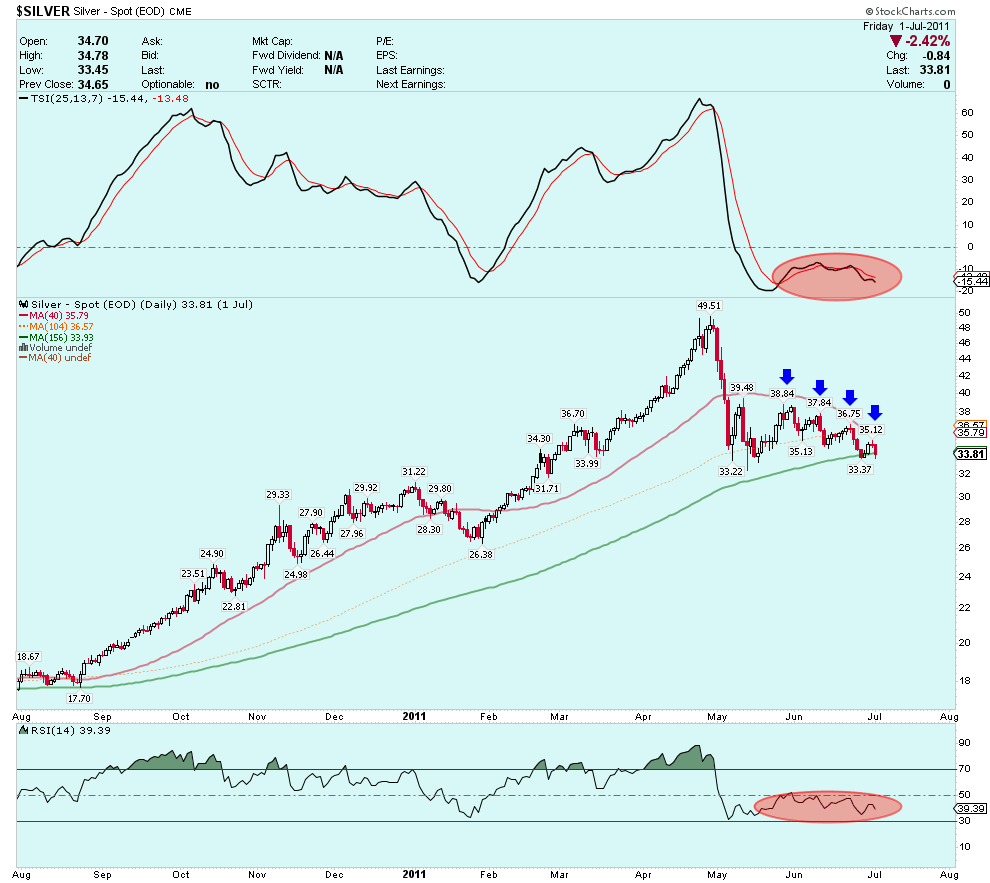
Every time silver begins to move higher, the ghosts of 2011 inevitably return. Investors remember the spectacular spike to nearly $50/oz in April 2011 followed by the brutal bear market grind lower that unfolded in May and June of that year (and the multi-year bear market that ensued).
But today’s silver market is fundamentally—and technically—very different from the one that existed fifteen years ago.
2011: A Blow-Off Top Fueled by Speculation
The silver market in early 2011 had all the hallmarks of a classic blow-off top.
Prices had gone nearly vertical during the preceding nine months as speculative enthusiasm exploded across retail investors, hedge funds, and momentum traders. Leverage in the futures market surged, sentiment reached euphoric extremes, and silver rapidly approached the psychologically important $50 resistance level that had capped the market during the 1980 spike.
When silver finally reached that level in late April 2011, the market simply ran out of buyers.
The warning signs were already appearing:
Silver failed to decisively break above $50 (very different outcome in 2025)
Momentum indicators began diverging
Volatility exploded as speculative positioning became overcrowded
Once the liquidation began, it was violent. A cascade of margin hikes and forced selling triggered one of the fastest corrections in the metal’s modern history.
Silver (August 2010 through July 2011)
2026: A Structural Bull Market
Fast forward to 2026, and the macro backdrop could not be more different.
The global financial system is increasingly shifting toward a multipolar monetary order, where gold and increasingly silver are regaining importance as neutral monetary assets. Central bank gold buying, geopolitical fragmentation, sanctions regimes, and rising distrust of fiat reserve currencies have fundamentally altered the landscape.
At the same time, silver’s industrial demand profile is dramatically stronger than it was fifteen years ago.
Silver is now deeply embedded in:
Solar photovoltaic expansion
Electrification and EV infrastructure
Advanced electronics and semiconductors
AI-driven data center power systems
This has contributed to persistent physical deficits in the silver market—something that was not nearly as pronounced in 2011.
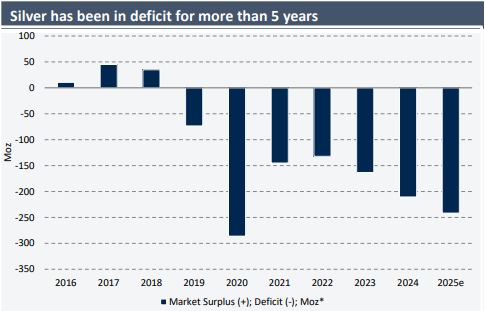
In short, the current silver bull market is being driven by structural demand and monetary dynamics, not simply speculative momentum.
The Technical Picture: Higher Lows Since January
The technical structure of the silver market today also tells a very different story.
After the sharp correction at the end of January 2026, silver has quietly been repairing its chart in a constructive way.
Silver (Daily)
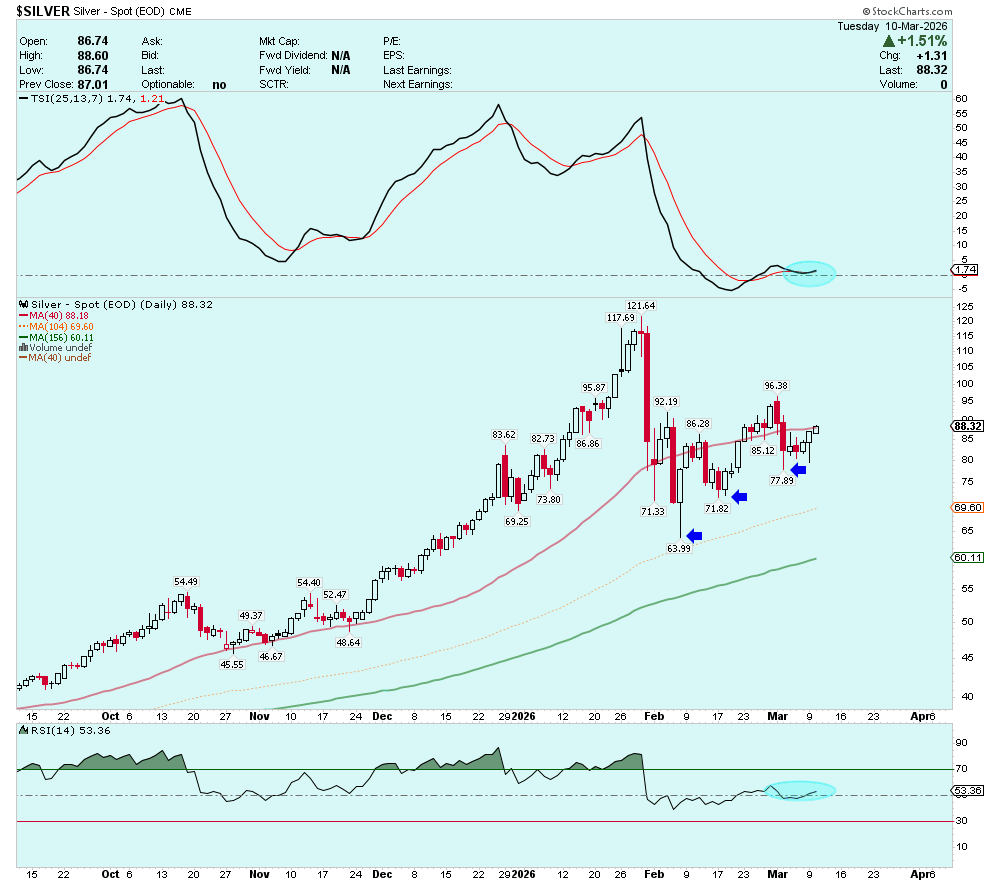
Instead of cascading lower like it did in 2011, silver has built a series of higher lows, indicating steady accumulation beneath the surface.
At the same time, key momentum indicators are improving:
Relative Strength Index (RSI) has been trending upward
True Strength Index (TSI) has begun to turn higher
Selling pressure has steadily diminished as investor sentiment has moved into neutral territory and futures speculative net length has unwound
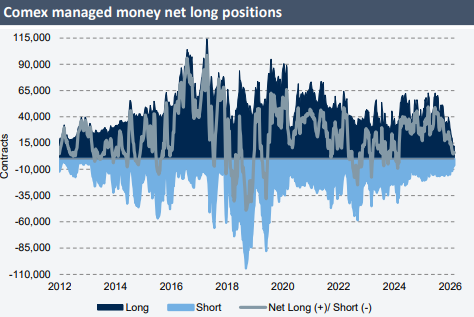
This is the opposite of what occurred during the May–June 2011 collapse, when momentum indicators rolled over sharply and remained pinned in bearish territory as price broke down.
In other words, silver today is trading better than it did in the early stages of the 2011 decline.
The Proof Is in the Pudding
Markets ultimately reveal their character through price action.
In 2011, silver could not hold its gains once the speculative excess was exhausted.
In 2026, despite a sharp January correction, the metal has continued to build a constructive base with rising momentum and higher lows.
That difference matters.
Because while the memories of 2011 still linger in the minds of many investors, the reality is that today’s silver market is operating within an entirely different macro regime—and a far healthier technical structure.
DISCLAIMER: The work included in this article is based on current events, technical charts, company news releases, corporate presentations and the author’s opinions. It may contain errors, and you shouldn’t make any investment decision based solely on what you read here. This publication contains forward-looking statements, including but not limited to comments regarding predictions and projections. Forward-looking statements address future events and conditions and therefore involve inherent risks and uncertainties. Actual results may differ materially from those currently anticipated in such statements. This article is provided for informational and entertainment purposes only and is not a recommendation to buy or sell any security. Always thoroughly do your own due diligence and talk to a licensed investment adviser prior to making any investment decisions. Junior resource companies can easily lose 100% of their value so read company profiles on www.SedarPlus.ca for important risk disclosures. It’s your money and your responsibility.
Well done. Thanks.
Would you please comment on exchange and major bank commodity price manipulation this time vs. 2011? That bit was left out of your comparison. Thanks!